


Why I’m Looking Beyond Traditional Platforms
When building a B2B e-commerce platform, the challenges are usually not about themes or plugins, but about architecture:
Custom pricing logic2
Flexible product structures
Integration with internal systems
Scalability without vendor lock-in
Popular platforms like Magento are mature and powerful, but also come with complexity and operational overhead. For newer projects where flexibility and long-term maintainability matter, I started exploring Medusa JS.
What Is Medusa JS?
Medusa JS is an open-source, headless commerce backend. Conceptually, it sits in a similar space to Shopify—but instead of a hosted SaaS, Medusa is self-hosted and API-first.
In practice, this means:
You own the backend
You control the data
You design the frontend freely
This makes it particularly interesting for custom B2B workflows.
Architecture Overview
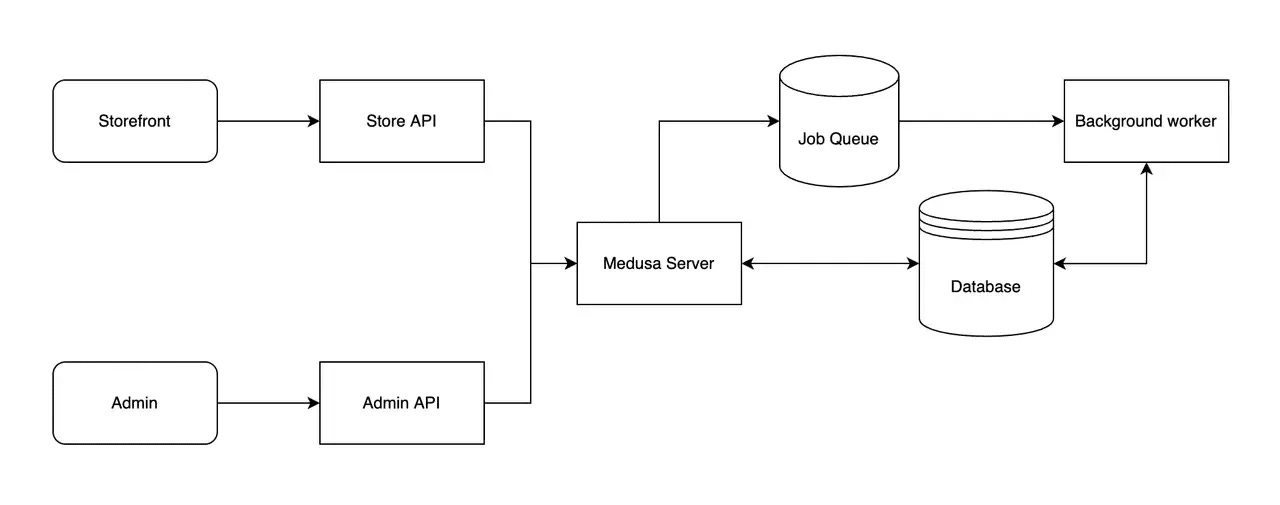
At a high level, the setup looks like this:
Backend: Medusa JS (Node.js)
Database: PostgreSQL
Frontend: Next.js (or any framework consuming APIs)
Optional: Redis for caching and background jobs
The backend exposes clean APIs, while business logic is organized into services, entities, subscribers, and plugins. From an architectural standpoint, this separation is a big plus for long-term maintenance.
Early Observations (Pros & Cons)

What Looks Promising
JavaScript-first stack: Easier onboarding for modern web teams
API-driven design: Clean separation between frontend and backend
Modular extensibility: Plugins and custom services feel natural
PostgreSQL as a core dependency: Solid choice for transactional systems
Things to Be Careful About
The ecosystem is still young compared to Magento
Documentation is good, but real-world examples are limited
Requires more architectural decisions upfront
Not ideal for teams looking for a “click-and-deploy” solution
Current Status: Testing & Validation
Right now, I’m still in the early-stage testing phase, running Medusa on a VPS and validating:
Deployment stability
Data modeling for B2B use cases
Integration patterns with a custom frontend
Operational complexity in real environments
This is not about replacing mature platforms blindly, but about understanding where Medusa fits best.
Final Thoughts
Medusa JS is not a silver bullet, but for teams that:
need full control,
value open-source,
and are comfortable designing their own architecture,
…it’s a very compelling option.
I’ll be sharing more findings once the testing phase progresses.
Resources
Docs & Quick Start: https://docs.medusajs.com